Public Transport in Paris
Paris is one of the most visited European cities, and has countless attractions. Therefore, any visitor to Paris needs to be able to make the best of the opportunity and see as much of the city as possible. Getting around Paris is easiest via the city's intricate public transport system, the RATP. The city's public transport comprises of buses, the metro, RER lines, and Commuter Rails, though the metro is by far the most efficient mode of transportation in Paris. It operates from Monday to Sunday and has a total of 380 stations, allowing easy access to all Paris has to offer. The bus system in Paris is fantastic as well, as you can actually see the city while you ride and get accustomed to its layout. With 58 lines, Paris' bus services can take you anywhere in the city at a reasonable rate. Maps indicating bus routes are available at bus stations, as well as at the Metro stations. Buses generally function from 6:30 a.m. up to 8:30 p.m., with a few extending their services till after midnight. The RER lines and Commuter Rails are like the metro only with fewer dedicated lines. These are more useful for short journeys through the city center.
Walking Around in Paris
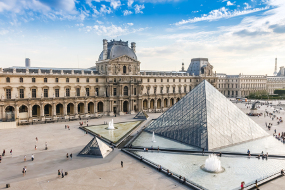
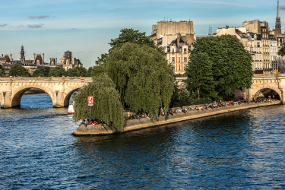
Paris is a lovely city of quiet beauty paired with scenic, breathtaking views. To experience everything that the 'City of Lights' has to offer, walking is a great way to explore. Start your walk in the city center at Place de la Concorde then proceed right into the heart of Paris, in the 8th arrondissement. The walk will then take you to the Louvre Museum. After you enjoy world famous art in the museum, you can get a dose of Paris culture and history in the surrounding gardens. Strolling along the banks of the Seine will leave you feeling refreshed and lead you to the historical Invalides. If you walk for about twenty minutes, you will reach the awe-inspiring Eiffel Tower, and can then proceed to the Parisian market. Here you can buy just about anything, from fresh vegetables to the best cheese Paris has to offer. A walk through the Le Marais will let you enjoy the vintage boutiques lining the streets. You can end the walk at the Pompidou and appreciate the contemporary art of Paris.
Coffee Shops in Paris
Coffee drinking is a timeless Parisian way of life, which has seen famous artists and writers such as Picasso and Guy de Maupassant taking their coffee breaks in traditional cafes. Contrary to modern practice, historic cafes such as Le Select, Café de la Paix and Café de Flore in Paris had cigarette smoke wafting through the air, as customers were served hot espresso and fresh baguettes. The emergence of third-wave coffee shops such as the famous Ob-La-Di Café, the charming Boot Café, and Fragments in the Marais neighborhood have since seen cigarette smoking being banned indoors, however the traditional atmosphere remains. Third-wave coffee shops incorporate a striking contemporary setting and offer a wide array of iconic pastries and desserts, including crepes, crème brulee, cake, macarons, profiterole, and the highly favored Parisian croissants. These are designed to satisfy different appetites, particularly for those who have a sweet tooth. Most third-wave coffee shops in Paris have in-house bakeries. The most significant similarity between traditional and third-wave coffee shops in Paris is that they incorporate both indoor and outdoor seating areas. Newspapers, journals, and magazines are provided to customers with outdoor sitting areas, allowing coffee enthusiasts to take in the sights and sounds of Paris as they enjoy their chosen delights.
Eating in Paris
The city of Paris is famous for being one of the top foodie destinations in the world. Paris is home to over one hundred Michelin star restaurants that produce some of the best dishes in the world. Food is an important part of the culture of Paris and great care is taken to make sure that every bite is savored and every meal celebrated. Eat like a local and pick up a croissant or any freshly baked pastry for breakfast, all of which can be enjoyed while walking through the streets of Paris. One of the best places to pick up a delicious pastry is from Angelina's, a small bakery on the Rue de Rivoli which has been in operation since 1903. The Parisians like to have a long lunch at one of the city's famous and authentic bistros, such as Le Patruche in the 9th arrondissement, or La Rotisserie in the 5th arrondissement. Book in advance for a dinner at L'Astrance where Chef Pascal Barbot creates unique dishes that are popular with both locals and international visitors. Try the buttermilk and burnt toast crumb soup for a taste sensation. Vegetarians and those with food allergies are well-catered for in Paris as well.
Best Time to Visit Paris
Paris is a cosmopolitan city, boasting a booming economy, proud cultural heritage, and numerous sights. Something interesting is always happening in Paris, the city of lights. For the avid traveler, there are many things to see all year round, but the best time to tour Paris is from June to August. The weather is perfect for exploring the outdoors, and the different colors in the squares and gardens of Paris are breathtaking during this time. Vacationers can always relax and have fun by the River Seine. Other summer activities include outdoor concerts and festivals. Spring is also a good time to visit Paris, when tourists can enjoy the blossoming flowers in many parks around the city. Spring stretches from March to May. The offseason, which is during fall and winter, is a rather quiet time of year to visit Paris. Some travellers take advantage of these months as there are thinner crowds. travellers have a great opportunity to stroll around the Eiffel Tower without any rush or can peacefully admire the painting of Mona Lisa without waiting in a long queue. Whatever time of year you visit the city of lights, there are highlights that you should be sure to see during your trip.