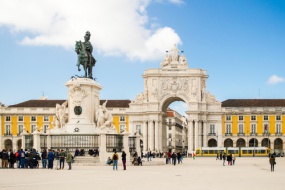
Lisbon is not only the capital but also the biggest city in Portugal with a population of 545,245. Lisbon has a total of 3 universities and is the most visited city in the country with over 1 million visitors arriving each year. Lisbon was first mentioned in the 8th century BC as a Roman Settlement, and it was subsequently invaded by the Vikings and the Spanish in the years following. During the Age of Discovering in the early 15th century, Lisbon was considered one of the main points of departure for all new routes and markets. The majority of ships heading for "new worlds" left from the Vasco da Gama port given Portugal is the closest European country to south and central America. In 1974, a nearly 50 year dictatorship in Portugal ended as a consequence of a Military coup called the ‘Carnation Revolution’.
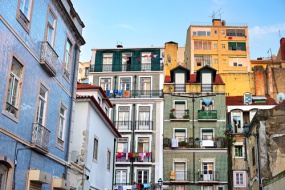
Lisbon is located on the Tagus river, the longest river on the Iberian Peninsula which starts in northern Spain. The city is relatively rural for a capital city with 7 small mountains in the centre alone. This is ideal given its hot climate all year round.
How to Get to Lisbon
Flying into Aeroporto de Portela
Aeroporto de Portela is the biggest airport in Portugal with a total of 18 million passengers handled in 2014. The airport has 2 terminals that connect Portugal with destinations in Europe, Africa and America (Brazil in particular). It is also the main base and headquarters for TAP Portugal, the national airline of the country.
Getting from Aeroporto de Portela to the city centre
Aeroporto de Portela is located just 4 miles outside of the city centre, and is therefore very accessible from here and other parts of Lisbon. There is a metro station at the airport where trains depart at regular intervals and take no more than 15 minutes to Saldanha station (the financial centre of Lisbon) on the red line. There are also shuttle buses available from the airport which are free of charge and will also take 15 minutes. These are, however, less frequent than the metro.
Costing no more than €10, taxis are located at the front entrance and the journey should last no longer than 10 minutes without traffic. Several car rental companies are also located at the airport. To drive from the airport to the centre, go via Av. Alm. Gago Coutinho and Av. Alm.
Trains to Gare do Oriente
Gare do Oriente is the central station in Lisbon. The station has been open since 1998 and was designed by Spanish architect Santiago Calatrava. Gare do Oriente connects Lisbon with not only the rest of Portugal but also to neighbouring Spanish cities with their national rail service, Renfe. Gare do Oriente has 8 platforms and an abundance of facilities littered around the station such as restaurants, coffee shops, toilets, currency exchange, ATMs and pay phones.
Getting from Gare do Oriente to the City Centre
The red line of the metro is located inside the station which connects Gare do Oriente with all corners of the city with ease. There is also a bus terminal of the same name located next door to the station; from there, you can access the city by the 728 and 400 bus that leave the station every 10 minutes.
The station is located 8.5 km away from the city centre of Lisbon. Travelling by car should take no longer than 15 minutes, whether by taxi or driving yourself. Taxis are located outside the station and are available 24 hours a day.
Trains to Lisbon-Santa Apolónia
Estação Ferroviária de Lisboa-Santa Apolónia is one of the oldest stations in Lisbon having opened its gates in 1865. This more central station is located in the Alfama borough directly next to the Tagus river - only 3 km away from the city centre. The station serves international routes to Spain and regional routes to northern Portugal.
Getting from Lisbon-Santa Apolónia to the City Centre
Given the stations close proximity to the centre, walking is not so time-consuming and will only take 30 minutes. Of course, bus and train options are also available for those wishing to access the centre by transport. The IC and AP trains run services every 15 minutes and last a duration of 8 minutes. Additionally, following a 6 minute walk to the nearest stop from the station, the 728 and 781 buses are available every 15 minutes for a 13 minute journey.
There are many different routes you can take from Santa Apolonia to the centre by car. The quickest being via Av. Infante Dom Henrique, which will take you to the city centre in roughly 9 minutes providing there is no traffic.
Buses to Estación de Autobuses Sete Rios
Sete Rios bus station is the biggest and most important station in Portugal; it is also the main hub for major Portuguese bus provider, Rede Expressos. In addition to domestic routes, it also covers several international routes with Eurolines. The bus station is located in the north of Lisbon, just 4 miles from the city centre. The other major provider serviced at the station is Eva.
Getting from Estación de Autobuses Sete Rios to the City Centre
There is a metro stop located at the station that connects Sete Rios with other metro stops all over the city. It is also located close to Jardim Zoologico station which opens up other areas of the city, including the centre. Driving is also an option and will typically take 12 minutes with the best route being via R. Gomes Freire.
Driving to Lisbon
Driving in central Lisbon can be hectic, but the motorways around the peripheries of the city are much calmer and easier to manoeuvre. Motorways around Lisbon predominantly link the surrounding areas with the capital city. However, several also connect Lisbon with other areas of Spain. Following the A1 allows access to Galicia, in Spain, and the North of Portugal. If you are travelling to Lisbon from the north-west of Spain from cities such as Salamanca, then it is best to follow the A25 or A23. Additionally, connecting Lisbon with the rest of Spain is the IP7 road.
How to Get Around in Lisbon
Public Transport in Lisbon
Public transport in Lisbon is the most popular way to get around the city, and this is predominantly because it is inexpensive and the easiest way to get up the many hills. The most efficient means of travel is the metro, although Lisbon does have an efficient bus and tram network running, and the older trams have even developed into somewhat of a tourist attraction with the number 28 tram used almost solely for this purpose. Lisbon has 2 zones, with the price of a single ticket corresponding to this. However, please note that it is not advised to use public transport during rush hour as this is when conditions are ideal for pickpockets.
- Public Transport Provider: Metrolisboa
- Cost of a Ticket: €1.40 for single ticket, €6 for a day ticket and €12 for a weekly ticket.
- Discounted Ticket Types: There are discounts available for the seniors, children, students and those under the age of 23.
- Availability of Public Transport at Night: There are 9 night buses available at night operated by Carris.
Cycling in Lisbon
Due to the hilly landscape in Lisbon, its is not traditionally a cycle friendly city. However, conditions are slowly changing as the City Hall has ordered for traffic to be slowed down in the centre and many new cycle lanes have been built.
Taxis in Lisbon
Taxis are very readily available in Lisbon, however taxi drivers might take tourists on longer, more indirect routes. It can be wise to keep an eye on the road in the off-chance this may happen.
- Base Minimum Fare: €2
- Cost: Varies according to provider
Driving in Lisbon
Generally it is not necessary to drive in Lisbon as the public transport system is very efficient and covers most of the city. For British drivers it is wise to note that driving takes place on the right side of the road and cars approaching from the right have priority.
Walking Around Lisbon
Lisbon is a city best experienced by foot and as such is very accommodating with a great deal of the more historical streets which are now pedestrianised. Walking around the entire city is possible, however can be challenging due the amount of hills present in the city.