How to travel from Dublin to Cork
There is a choice of public transport between Dublin and Cork; you can choose to take a coach or a train. Dublin to
Cork is one of the most popular round trips in Ireland, as you would expect given that the journey links the first
and second cities of the Republic (some inhabitants of Cork will tell you Cork is actually the real capital of
Ireland, but either way, you are travelling between the first and second cities of Eire). Not only is Cork the
second biggest natural harbour in the world, but it is also the home of the world-famous Blarney Stone – no way of
kissing the Blarney Stone without travelling to Cork!
Cork can lay claim to being the cultural capital of Ireland
with its profusion of art galleries, innovative restaurants and the most important jazz festival in the country.
Just as Dublin has Guinness, Cork has Murphy’s Stout – try an ‘adult float’ – an ice cream beer float that makes the
most of Murphy’s distinctive flavour. Transport connections allow visitors to get from Dublin to Cork easily enough
to make a weekend break very feasible but there is more than enough to do and see to make a longer vacation
worthwhile. It takes less than 3h by train to get from Dublin to Cork and in fact the fastest trains make the
journey in just 2h 37 min. Both trains and coaches are available every day of the week.
What is the cheapest way to get from Dublin to Cork?
The cheapest way to get from Dublin to Cork as an individual traveller is to take a bus. There are four coach
companies travelling direct between the two cities, GoBus (every 2h), Bus Eireann (four times a day), Dublin Coach
(every 4h) and Aircoach (every 2h). The combination of bus companies means there are departures at least
approximately every hour during the day plus less frequent night buses leaving Dublin after 11:00 p.m.
All the
routes terminate in either St Patrick’s Quay or Parnell Place in Cork but they depart from various points in Dublin
including the airport and various city centre locations such as Westmoreland Street and Heuston Railway Station.
Fares between Dublin and Cork vary so it always pays to book in advance and to check out various dates either side
of your preferred travel date. Of course, it is always a good idea to look at any discounts there may be for
students, families, senior citizens and so on.
What is the fastest way to travel from Dublin to Cork?
.
The fastest Dublin to Cork travel time (excluding renting a car, of course) is by train. The fastest train only takes
2h 37 min to cover the roughly 150 miles (240 km) between Dublin and Cork as the crow flies. The quickest trains
make only four stops between the two cities and of course there is the added advantage of leaving from and arriving
at city centre locations (Dublin Heuston, just outside Dublin city centre but easily reached by one of the frequent
trams heading westwards out of the centre, and Cork Kent respectively).
Find the best tickets from Dublin to Cork and book with Omio
Omio is a booking platform that helps to compare and book all modes of transport from Dublin to Cork and then choose
the best option for you, including finding cheap tickets from Dublin to Cork. You will find all the main travel
companies in one place and the information from each one is displayed to allow you to scan , one-way and round trip
tickets on all travel options at a glance.
Omio is an internationally recognised platform and makes its booking
processes and customer services available in your language, offering its website in the language of the country you
are searching from. Go to Omio to compare service providers by entering your dates and routes, then book your travel
through Omio and get mobile tickets – no need to print anything out unless your particular travel company specifies
a printout as a condition of carriage. Between trips, keep in touch with the world of travel through Window Seat our own in-house travel magazine.
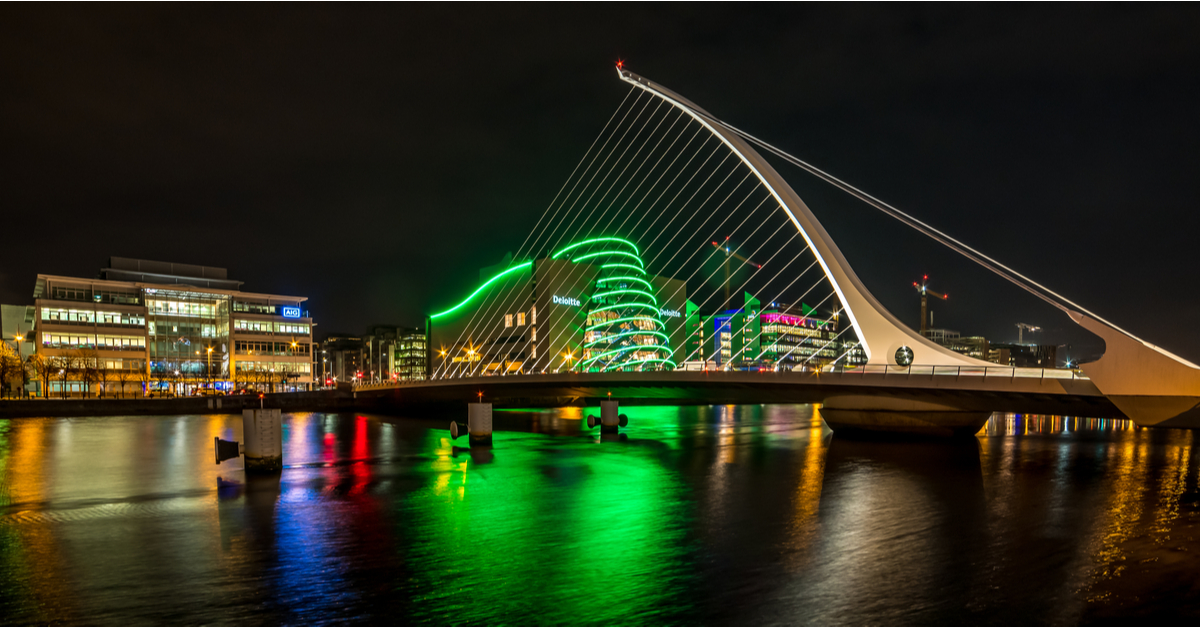
Bridge Dublin. Source: Shutterstock
Trains from Dublin to Cork
Train travel is one of the best ways of getting from Dublin to Cork – enjoy the spacious carriages, sink into your
pre-reserved and very comfortable seat, avail yourself of the plentiful of luggage space, and settle down to drink
in the green Irish countryside through the big panoramic windows. Trains bound for Cork leave Dublin Heuston station
every hour throughout the day between 7:00 a.m. (8:30 a.m. on Sundays) and 9:00 p.m. all seven days of the week Most
of the trains are direct although occasionally it is necessary to change at Mallow (this applies to the first train
on Sunday mornings for example). Heuston is Dublin’s biggest station, easy to find because it is right next to
Phoenix Park just to the West of the centre of the city. Cork Kent station is only a 10min walk from the centre of
Cork, or hop on a 205 bus from the station through the city centre and on out towards the West of the city.
Train travel from Dublin to Cork with Irish Rail
Irish Rail, or Iarnród Éireann, is the railway company that runs trains all around the Republic of Ireland, including
between Dublin and Cork. The company runs smart modern trains on this route. The route passes through rocky Limerick
and gentle, green Mallow – make the most of the emerald-green Irish scenery. It may be worth comparing prices for
first and second class tickets on this route. The main difference is the extra space – four seats across each row in
second and three seats across each row in first class. Omio will provide the Dublin to Cork price and travel time,
then click though to the Iarnród Éireann website to double-check accessibility, catering (and especially
availability of the full Irish breakfast, reputed to be amongst the best in Ireland), and travelling with pets. The
company provides wifi throughout all their trains and some carriages also have sockets for charging phones etc.
Buses from Dublin to Cork
There are four coach companies travelling between Dublin and Cork but not all of them operate non-stop routes so
double-check the travel time from Dublin to Cork as well as the cost of Dublin to Cork tickets. Bus Eireann runs its
245X service four times a day from Hueston Station in Dublin to Cork Bus Station in Parnell Place, Cork city centre.
The 245X service makes five stops along the way – could be the right choice for visitors wanting to see more of the
countryside and smaller towns as they travel across Ireland. Dublin Coach’s 600 M9 Express service departs from
Burgh Quay in Dublin four times a day, seven days a week and travels through Kilkenny and Waterford to Cork,
terminating at St Patrick’s Quay in Cork. This service also makes five stops before reaching Cork
Traveling by bus from Dublin to Cork with Aircoach and GoBus
Aircoach, as its name suggests, departs from Dublin Airport. It also picks up passengers from Bachelors’ Walk in
Dublin, just across the river from Trinity College and then it is non-stop to St Patrick’s Quay in Cork.. The GoBus
Dublin to Cork service also departs from Dublin Airport, picks up passengers in the city centre from its stop right
next to the historic O’Connell Bridge and then its straight down the M50 to St Patrick’s Quay in Cork.
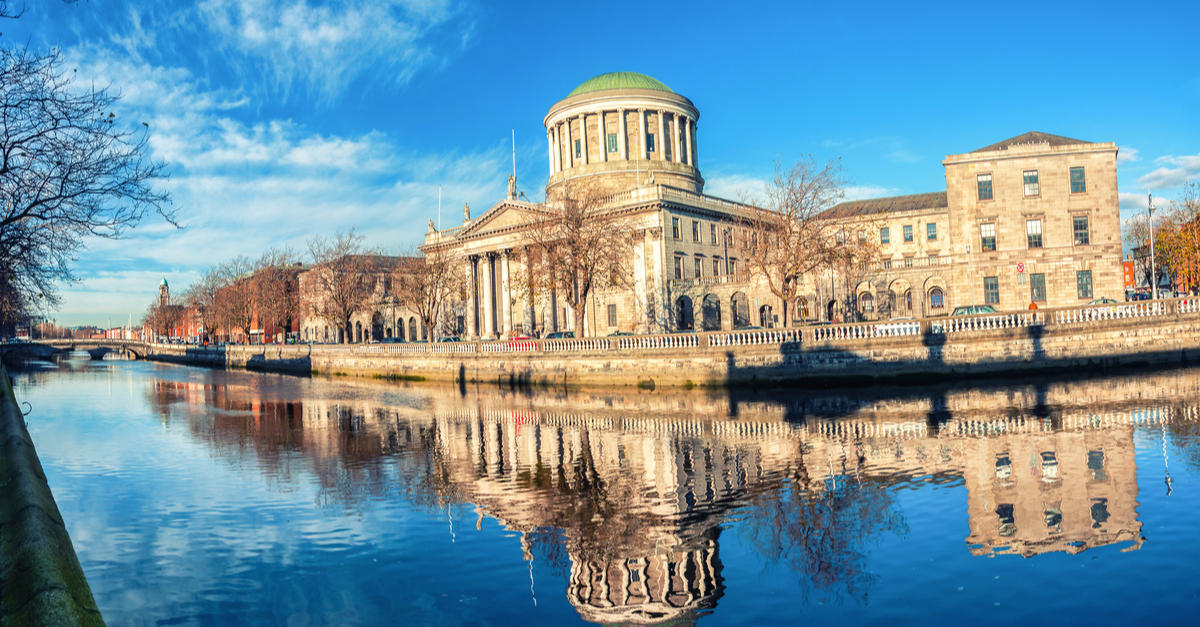
Courts Dublin. Source: Shutterstock
To Dublin by train/bus- travel tips
Dublin is famous the world over for its proud historical and literary connections, its architecture, its ‘craic’
roughly translated as a spirit of fun in its pubs and cafés and of course the fabled warmth of the Dubliners
themselves. Visit Dublin to experience all the most typical aspects of this wonderful capital city but don’t forget
to make time to stray beyond the tourist hot spot of Temple Bar in order to explore Dublin’s other gems including
its live music scene, its many libraries and museums, the immensity of Phoenix Park in the city centre and the
beautiful Georgian architecture.
Dublin is also a marvellous place to eat out – starting with the seafood at Howth
and a pint of Guinness. Breathe in plenty of the fresh salty sea air to sharpen your appetite to make room for the
ultimate Dublin comfort food; called coddle it is a sort of sausage, bacon and potato stew. Then there is the
traditional Irish breakfast – you may find it keeps you going for the rest of the day.